A volcanic island in the Gulf of Guinea, cloaked in rainforest and surrounded by reefs, its dramatic outline studded with beach coves and tall palms, its interior peppered with spindly basalt mountains reaching heavenwards from mist-swirled jungles. The air redolent with fresh mango, the sea and the scent of the earth after generous downpours, the island of Príncipe is purest paradise, and there’s barely anyone there.
São Tomé e Príncipe is an island nation off the coast of Central Africa. Just three per cent of the 200 000 population live on Príncipe, separated from the island of São Tomé by 40 minutes in a twin-prop plane. Príncipe’s 7 000-odd people eke out a meagre, disproportionately happy existence in one of those unspeakably pristine places, its time-warped wildness preserved by isolation.

For 500 years this was the domain of Portuguese plantation owners who exploited the lush landscape and equatorial climate to grow cacao and coffee on the backs of slave labour. Despite colonisers clearing tracts of forest for crops, Príncipe remained Edenic, ‘like a magic land, the dream of some wild painter’, according to British journalist Henry Nevinson who visited in 1906.
And yet when investor, IT entrepreneur and one-time space tourist Mark Shuttleworth landed here, quite fortuitously, in 2010, it was also a place in need of a miracle.
Príncipe is the tinier, more pristine of the two islands that make up Africa’s second-smallest nation after Seychelles. But the government, struggling to make ends meet, was on the verge of signing a deal that would have allowed a palm-oil producer to convert more than 1 000 hectares of jungle into plantations, a terrible tragedy for a place that’s home to the greatest number of endemic species per square kilometre on the planet (more than the Galápagos Islands).
When Shuttleworth touched down in his Bombadier 15 years ago, he and his pilot had been casting about in search of a convenient stop-off between his two bases – the Isle of Man and Cape Town, where he grew up.
He says he’d been on the lookout for somewhere that would give him that feeling of being in Africa, without being too much in the thick of things. A millionaire’s playground without the millionaires, perhaps. Without much of anything, really, São Tomé e Príncipe remains one of the least-visited countries in the world – it logged only 33 000 visitors in 2018, before the pandemic threw in a spanner. International flights are few, private jets handier.
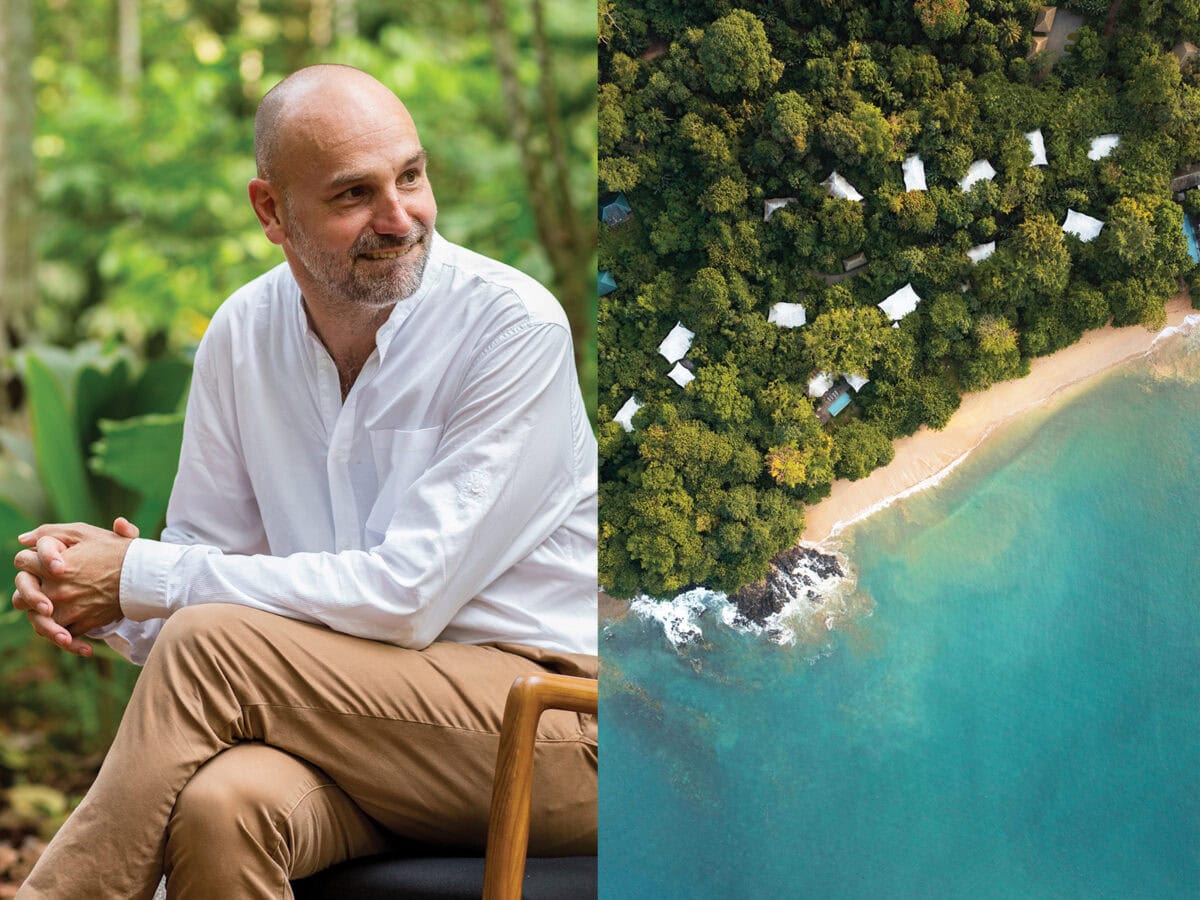
Born in the mining town of Welkom in the Free State, the 50-year-old, who created software company Canonical and founded the operating system Ubuntu, is for many a legend, responsible for democratising access to computing. His ‘in-his-parents’ garage’ origin story includes founding Thawte, a global leader in cryptographic security, while still a student at UCT.
‘I was fascinated with the internet as a way to connect people and do business,’ he says of his earliest forays. Cape Town was at the very tippity edge of the internet in those days.’ He started ‘figuring it out’ with ‘a little Linux server’ and ‘a dial-up connection’.
Curiosity was always his driver, but his trip into space in 2002 tripped the switch and reconfigured his world view. He spent eight days aboard the International Space Station, and returned with a new perspective on the wholeness of everything, and a desire to ‘do something that would have a global impact’.
The journey greatly deepened his connection to Earth and enhanced his awareness of its vulnerability. ‘You see Earth as a whole all at once, so everything feels connected,’ he says. ‘You’re over San Francisco and 20 minutes later you’re over Santiago, Chile. You have a very strong sense of the impact we have on each other. Pollution from one country is drifting into another. It made me more aware of the fragility of Earth and the consequences of what we’re doing. We’re literally attacking our own spaceship.’

It sparked in him a desire not to colonise Mars or fund space rockets, but to look for ways of investing in our planet’s preservation. Landing on Príncipe a few years later was precisely the spark of inspiration he needed. Something about the Jurassic Park febrility of the island touched him deeply.
He says, too, that he was struck by its fragility, aware that at any moment its unspoilt magic could unravel. Despite its size, it is inundated with wonders: its rich biodiversity includes endemic plants, birds and butterflies; its waters teem with kaleidoscopic coral-reef fish; humpback whales visit seasonally; and, from July, green, hawksbill and leatherback turtles nest on palm-fringed Praia Grande.
But its people are undeniably poor, which makes those natural riches vulnerable.
When Shuttleworth learned that the fate of Príncipe’s pristine wilderness was in the balance, he dreamed up Here Be Dragons (HBD), an enterprise punting small-scale, high-end ecotourism as a way of luring visitors – and their wallets – to the island.
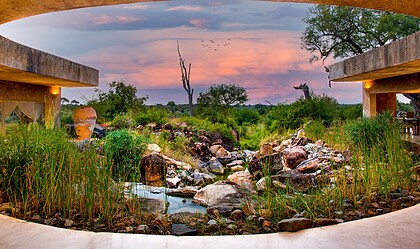
Shuttleworth was granted permission by the government to invest in several areas in the island’s north; his first purchase was a group of beach shacks, known as Bom Bom, scheduled to relaunch this September, following an extensive upgrade. It’s one of three barefoot luxury resorts HBD has on the island. There’s also Omali Lodge, a 30-room hotel on São Tomé where guests typically stay before onward flights.

His intervention goes well beyond hospitality, though. In 2012, the combined efforts of the government, local community and HBD saw Príncipe designated as a UNESCO Biosphere Reserve. There’s no green-washing here. Shuttleworth is in for the long haul, has established social programmes, housing schemes, training facilities – plus HBD is Príncipe’s largest employer, having created jobs for over 500 people. A form of universal basic income has been instituted to incentivise residents to rewild their land rather than turning quick profits via potentially deleterious agriculture. The Financial Times called it ‘a $100 million experiment in sustainable tourism’ and Shuttleworth admits there’s no prospect of financial return; his sole objective is altruism.
He says this kind of investment in the future is in line with his decision, years ago, not to have children. Rather than leaving a genetic legacy, he’s creating a blueprint for ways that other wealthy, privileged folk can apply themselves to the task of investing in the planet.
‘I like hard problems,’ Shuttleworth says. ‘The idea of starting something that’s really difficult and expensive to do and has no obvious business model. It’s hard, but wouldn’t it be nice to try something almost impossible and see if you can pull that off?’
Keith Bain
Images supplied by HBD Principe and Scott Ramsay