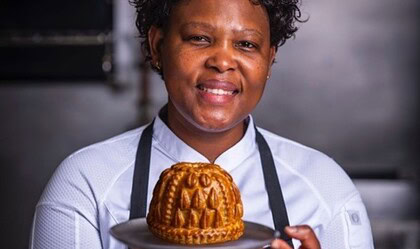
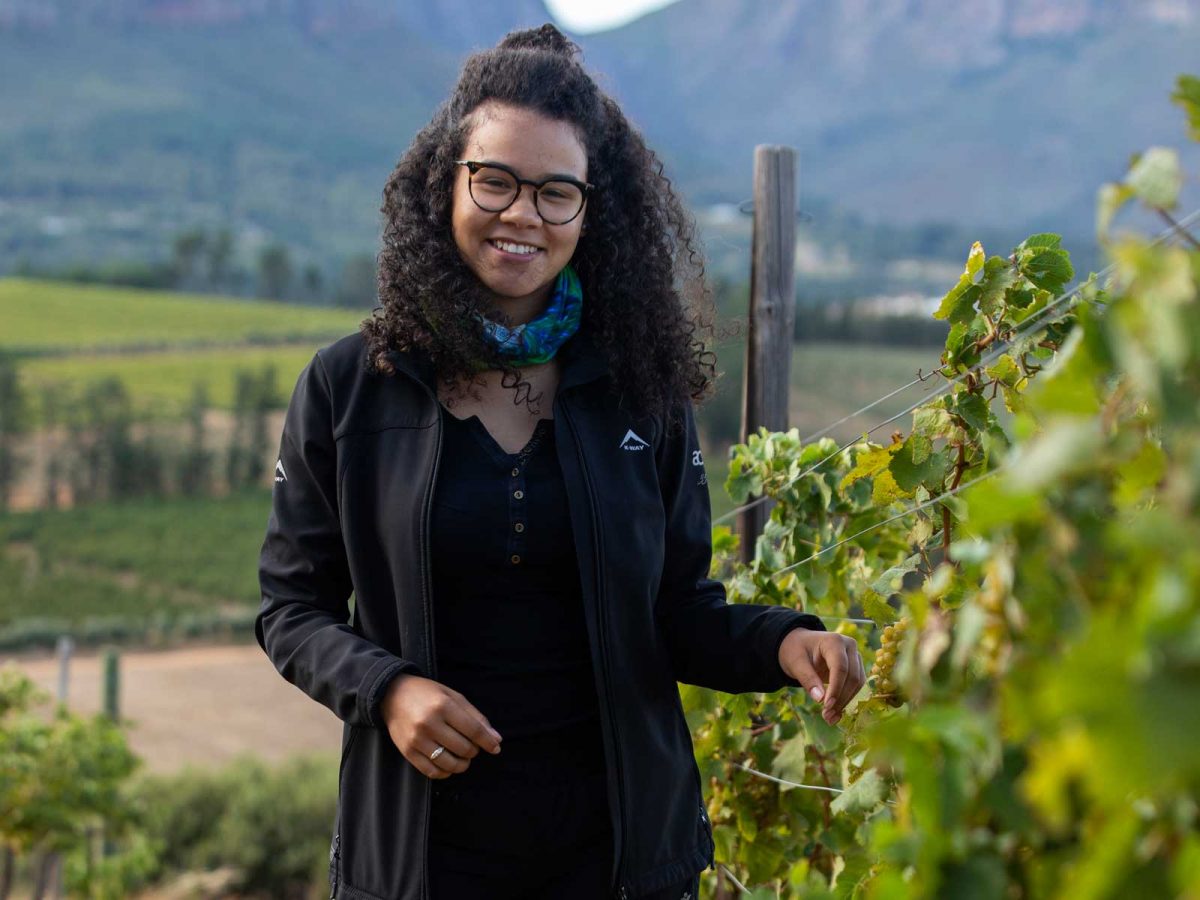
‘Sometimes it seems like we’re the ugly step-sister of South African wine,’ laughs Kiara Scott from the Paarl winelands. ‘But I want to break boundaries, and change those perceptions of what wine from this region is like.’
As a young woman of colour, Scott has made astounding strides in her short career. Raised in an impoverished Cape Flats suburb, she excelled in her studies at Elsenburg Agricultural College and was accepted into the prestigious Cape Winemakers Guild Protégé Programme. Cue three years of working alongside leading lights of the local industry, and harvests abroad, before joining Duncan Savage at his urban winery in Cape Town.
At the time Savage was consulting to Brookdale Estate in Paarl, and when they needed a full-time winemaker Scott was an obvious choice.
Today she oversees two ranges for Brookdale. Mason Road is the everyday lifestyle range with a Chenin Blanc, Rosé and Syrah made from the fruit of younger estate vines, but it’s the Brookdale range that is turning heads.
The Chenin Blanc, from 36-year-old vines, is making waves here and abroad. The 2019 vintage – the first with Scott at the helm – garnered high praise from UK-based critic Jancis Robinson: ‘Elegant and beautifully composed. This is a seriously classy, sophisticated-artisan Chenin.’
Scott has set her sights on more than Chenin Blanc though, with innovative field blends – 20 cultivars in a single vineyard – already planted out.
‘In Portugal it’s very common, but nobody else is doing something else like this here,’ says Scott. ‘We wanted to express the complexity of the vineyard and the terroir of Brookdale. In years to come there will be a beautiful synchronicity in that block.’
And while crafting fine wines is the priority for Scott, she’s not unaware of her new position as a role model.
‘It’s a privilege for me. There are many people of colour, and women, that feel it’s not the industry for us. But then they see someone like me and think maybe they can do it. So we don’t always do it for ourselves. We do it for the people who come after us’.
By Richard Holmes