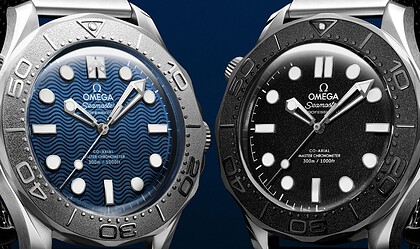

Precision, longevity and the mastery of almost impossibly intricate mechanisms – these are the hallmarks of the centuries-old craft of haute horlogerie. Now, in an era defined by environmental urgency, forward-thinking watchmakers are applying the tenets of their trade beyond the workshop, in service of the planet itself.
The most storied maisons have long had an affinity with the natural world, born from the very environments in which their timepieces proved their worth: the abyssal depths that tested dive watches, the polar ice caps that challenged explorers, the void of space where chronographs became mission-critical.
Indeed, a heritage of exploration is woven into the DNA of luxury watchmaking. Omega’s Speedmaster is synonymous with lunar exploration; Rolex’s Oyster Perpetual accompanied Edmund Hillary to Everest; and Blancpain’s Fifty Fathoms was a pioneer of the modern dive watch. Preserving the environments that forged these legends is thus a natural extension of their origin stories.
What’s more, longevity is the industry’s currency. A fine mechanical watch is built to outlast its owner – an heirloom of steel, gold and sapphire crystal that resists obsolescence. Environmental stewardship mirrors that philosophy: protecting the planet for inheritance by future generations.
And then there’s the fact that, increasingly, watch aficionados seek out brands with authentic purpose. Ambitious environmental initiatives, often spanning decades, position watch brands not only as makers of exquisite objects, but also as actors with real influence and responsibility.
It’s against this backdrop that several watchmakers are leading with unique and, in some cases, truly pioneering initiatives.


CONSERVATION ON A GLOBAL CANVAS
Rolex’s Perpetual Planet Initiative, launched in 2019, is among the most comprehensive environmental programmes in the watch industry. It channels the brand’s longstanding association with exploration – forged by its support of pioneering mountaineers, divers and scientists – into a framework that backs more than 20 partners worldwide, spanning every continent and encompassing disciplines from marine biology to climate science.
Key among these is Mission Blue, founded by oceanographer Dr Sylvia Earle, which is working to establish a network of marine ‘Hope Spots’, ecologically significant areas targeted for protection, with the goal of safeguarding 30% of the ocean by 2030. Rolex also partners with National Geographic for scientific expeditions, from charting the depths of the Mariana Trench to assessing the impact of climate change in the Amazon Basin.
Another striking collaboration is with Coral Gardeners, a Tahiti-based initiative using innovative propagation techniques to restore degraded reefs. The project has already replanted over 100 000 corals, with an ambition to reach one million in 2025.
Rolex’s role is not simply to provide funding, but to amplify these projects through storytelling that reaches a global audience. In doing so, the brand transforms its ‘Perpetual’ ethos from a product descriptor into an enduring commitment to the planet’s most vital and vulnerable environments.
rolex.org/environment/perpetual-planet
CITIZEN SCIENCE BENEATH THE WAVES
Marine conservation has been part of IWC Schaffhausen’s identity for two decades, most visibly through its Aquatimer dive watches. The maison’s partnership with Cousteau Divers – founded by legendary explorer Jacques-Yves Cousteau – has evolved into a remarkable citizen-science project: equipping recreational divers worldwide with precision sensors to measure ocean temperatures at depth.
These devices, developed by volunteer engineers, gather data in coastal ecosystems where biodiversity is greatest but scientific measurements are sparse. By integrating this diver-collected data with satellite readings, scientists can gain unprecedented insight into how the ocean stores and releases heat – critical knowledge in the fight against climate change.
For IWC, this is a sustained collaboration rooted in innovation and open-source technology. It demonstrates that even in the most traditional of industries, the tools of the future – cloud platforms, distributed data and citizen engagement – can be harnessed in service to the planet.

CHARTING THE FINAL FRONTIER OF SUSTAINABILITY
In 2022, OMEGA entered an unexpected arena: orbital sustainability. The strategy is twofold. First, it partnered with Privateer, the space-data company co-founded by Apple’s Steve Wozniak, to help tackle one of space exploration’s least glamorous but most urgent issues, space debris, which currently consists of more than 27 000 tracked objects orbiting the Earth at high velocity.
Through Privateer’s Wayfinder, a near real-time, open-access map of all known satellites and debris, the partnership aims to safeguard the future of space travel. OMEGA’s contribution lies not in propulsion systems, but in its expertise in precision timing and its cultural influence to raise awareness of an issue invisible to the naked eye but potentially catastrophic to exploration.
Second, OMEGA joined forces with ClearSpace, the European Space Agency-backed start-up behind the world’s first active debris removal mission, slated to capture and deorbit a defunct satellite in 2025. This extends OMEGA’s reach from mapping the orbital environment to actively supporting its clean-up.
For a brand whose Speedmaster became the first watch on the moon, the initiative is far more than a marketing campaign. It’s a recognition that all exploration must be sustainable, whether in the ocean, on the ice, or in orbit.


omegawatches.com/planet-omega/social/our-planet
REDISCOVERING A LIVING FOSSIL
Blancpain’s Ocean Commitment programme has supported more than 20 major marine conservation projects, but few capture the imagination quite like its backing of divers Laurent Ballesta and Alexis Chappuis in documenting the elusive coelacanth, the deep-ocean-dwelling fish capable of living for up to a century.
Once thought extinct for 70 million years, the coelacanth – a species with strong ties to South Africa, where one of the two known living species was famously rediscovered off the coast of East London in 1938 – is a living link to the age of dinosaurs. In a 12-minute documentary, Ballesta and Chappuis share the story of capturing the first-ever images of both species of the fish in their natural habitats – an achievement made possible through Blancpain’s ongoing support.
The short but poignant documentary, and the scientific project it describes, is a reminder of the ocean’s mysteries and the urgency of protecting them. For a brand whose Fifty Fathoms helped define modern diving, the project brings together heritage, adventure and conservation. As Ballesta concludes in the documentary: ‘As long as there are a few passionate people willing to make some sacrifices to go look deep down, in the dim light… at this somewhat clumsy animal, there is still hope.’