‘It gives me gooesbumps,’ says celebrated Cape Town chef Peter Tempelhoff as he talks of plans for Arum, his new restaurant at Boschendal. He calls the wine-focused but widely diversified farm, established 340 years ago, a ‘chef’s playground’ due to its rich history as an agricultural ground-breaker.
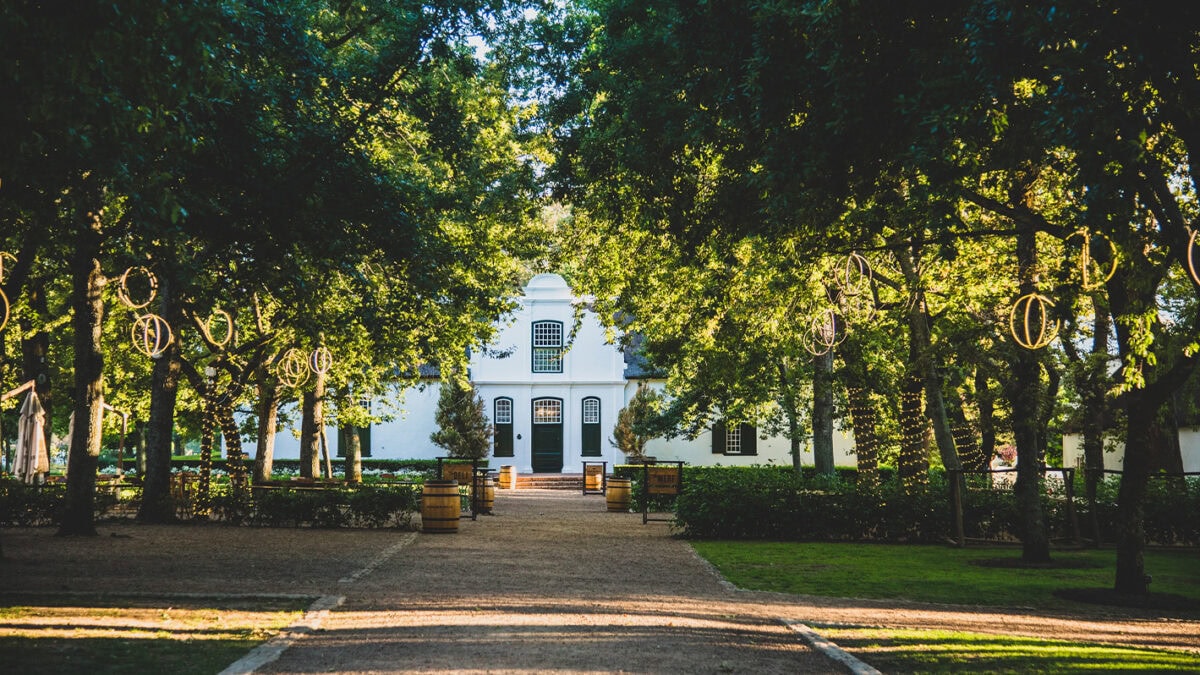
Arum occupies Boschendal’s historic Werf, once the wine cellar for its 1812 manor house, and quite the landmark – the space first operated as a restaurant in 1977 (the first to open on a South African wine estate), kick-starting a culinary movement that’s now pretty much synonymous with the Cape Winelands.
Tempelhoff says Boschendal was also one of the first South African farms to export fruit, and its restaurant the first to serve malva pudding. ‘It was Henry Kissinger’s favourite memory during a visit to the Cape – malva pudding and brandy snaps at Boschendal. Maybe we’ll do an updated version of that dessert. Who knows?’
Aside from the gorgeous setting, the sense of a countryside escape, and the playful contrast of Cape Dutch architecture with contemporary interior design by Tristan du Plessis, what’s really fuelling Tempelhoff’s excitement is access to the farm’s abundance. There’s tremendous produce, meat reared the old-fashioned way, regenerative agriculture and traditions that link humans to the soil in ways that are easily forgotten in this age of supermarkets, fast food and online deliveries.
‘They have over 400 Angus cattle and the farmer’s been developing the marbling and the tenderness precisely to our specs,’ Tempelhoff says. ‘There are Duroc pigs, which are, in my opinion, like the Wagyu of pork. And they’ve got Dormer sheep, which produce highly marbled, beautiful fat-to-meat ratio lamb.’
Proteins aside, ‘they’ve got all the vegetables you can think of’, and Tempelhoff says his team has been working with the growers for over a year to ensure there’s a good supply, supplemented by specially planted heirloom vegetables using seeds sourced from far and wide. ‘They also have a sun-sheltered mist-doused forest at the end of the garden where they grow mushrooms, so we have fresh-picked eringi, oyster, enoki, shiitake and wild indigenous mushrooms – all the edible fungus we could want.’
Tempelhoff says his vision for Arum is as a place where ‘you can come and just taste the farm, get a very real sense of what this earth is producing. I want folks to walk out with a sense of real connection to the place they’ve tasted. To do that we’ll be showcasing the ingredients to the best of our ability.’
He says what’s served will be dictated by what the earth provides. ‘Nothing’s set in stone. Our menus are inextricably based on what’s coming out of the garden. It’s right there underneath our noses – our chefs can walk out the back door and 20 feet away grab something to put on the plate. Each menu will be in use for maybe three weeks, according to what’s being picked and harvested. We’re prioritising meat and vegetables, fewer carbs like potato and rice, more small heirloom crops. And a little bit of fish – trout from down the road in Franschhoek, some Lambert’s Bay oysters, not too much seafood because we want people to eat the farm, get a true sense of place.’
Overseeing Arum’s operation, including its coal-to-soul wood-firing programme, is Travis Finch, a chef who first cooked alongside Tempelhoff in 2009, and has since worked at two- and three-star Michelin restaurants overseas. ‘He comes with a wealth of ideas, and this really is his baby,’ Tempelhoff says.
After living in London and working on ultra-luxury private yachts, Finch is now based on the Boschendal estate, making it possible for him to cycle to Arum each day. He says it’s the garden that’s had the most significant impact on his plans for the menu, something which has developed ‘monumentally’ as he’s started to become familiar with the farm, understand its rhythms and see its potential.


‘We talk directly to the growers about our ideas, so there’s an intimate relationship with the garden,’ he says. ‘Regenerative cooking is one way of describing what we’re doing, which is aligning our kitchen with the operation out in the garden. While we aim to utilise every single bit of the vegetable, whether through our fermentation programme or in simple preparations on the plate, if there’s any vegetable waste, it goes into compost that is transferred directly back to the garden as fertiliser.’
Finch says that, internationally, there’s also a move towards simpler, more gastronomically manageable menus that are becoming more and more the norm at many Michelin-star restaurants. Part of that shift, he says, is the return to à la carte, which also makes dining more accessible. ‘We wanted to create an elegant but casual environment where, if someone wants to come and have a fantastic Negroni and then share a 1.2kg ribeye on the bone, or tuck into a beautifully prepared aged Black Angus steak with a couple of sides, we’re there for them. We don’t want Arum to be a starched environment.’
Rather, it’s the beauty of Boschendal’s outdoor environment with its stellar views of rugged mountains that both Finch and Tempelhoff say they’re taking daily inspiration from. Finch says the opportunity to cook within the heart of this agricultural setting ‘is an absolute dream come true’.
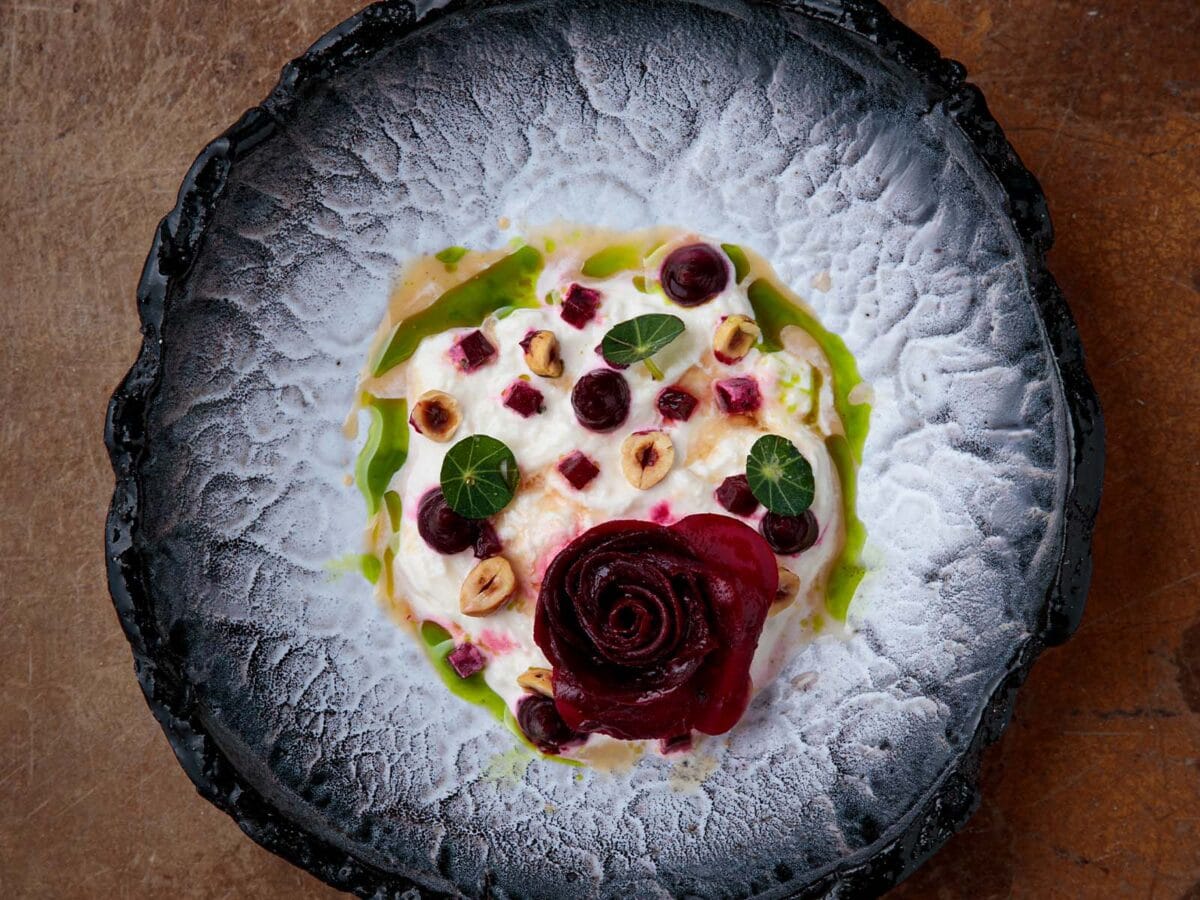
It’s no ordinary farm-to-table restaurant, of course, with plenty of distinctive elements: custom-designed plates by local ceramicists, and bread- and meat-boards handmade by woodworkers. It’s designed to be a bustling space, with three meals a day, seven days a week.
There’s also a tremendous synergy between the way Tempelhoff and Finch think about food and the approach to farming practised at Boschendal. ‘They’re so entrenched in regenerative farming and sustainability; they’re leaders in the field,’ Tempelhoff says. ‘Everything we as chefs aim for in terms of sustainability and ethical sourcing is similar to what Boschendal does, so we’re very aligned. When you sit out there on the deck, outside the restaurant, and look out over that massive garden, you witness the extent of that shared passion.’
Spier’s farm-driven approach
There’s a similar passion of embracing the land and its produce happening on the far side of Stellenbosch at Spier, where much culinary bravado revolves around an embrace of back-to-basics practices such as the regenerative farming methods espoused by a former Goldman Sachs investment banker named Angus McIntosh, known to lovers of high-quality meat as Farmer Angus.
McIntosh farms chickens, pigs, cattle – and now vineyards too – for his Farmer Angus brand. He uses no antibiotics, hormones or pesticides, and he farms holistically, treating the farm as a self-sustaining ecosystem and prioritising the sacrosanct relationship between soil health and human health.
It’s not only proteins from healthier, happier animals that are on the menu at Spier’s new dinner-only restaurant, Veld. Part of an old horse paddock at Spier has been transformed into a thriving food garden, from which most of the kitchen’s greens are sourced. The garden is tended by in-house agroecologist Megan McCarthy whose team uses similarly eco-friendly regenerative techniques that eschew inorganic pesticides and artificial fertilisers, letting Indian runner ducks sort out the snails and slugs.

The restaurant, with its art salon atmosphere, views of chefs at work and glass-walled wine library, has a concise menu that hinges on available fresh-from-the-farm ingredients rather than on an elaborate expression of a chef’s experimentation.
‘Some people call it “farm to fork” or “farm to table” – for us, it’s just uncomplicated,’ says Spier’s head chef Craig Paterson. ‘We focus on respecting and showcasing the ingredients, not fiddling too much, so no foams and gels or any of those complicated ideas chefs enjoy showing off with.’
The menu is concise and seems decidedly old-school in its no-nonsense assemblage of unpretentious classics: there’s a steak cut of the day with hand-cut chips and garden greens; the roasted squash arancini is paired with labneh, sage and pumpkin seeds; and the springbok loin comes with an assortment of carrots from the garden and a citrus jus. Nothing screams ‘fancy’, but every morsel is delicious, honest and fresh. And everything’s made from scratch: from the house-made piccalilli accompanying Farmer Angus charcuterie to the pillowy brioche served with their signature mushrooms on toast, a sophisticated starter of mushroom pâté, pickled shimeji and roasted king oyster mushrooms, with parmesan, truffle aioli and a soft poached egg (from McIntosh’s free-ranging chickens that roost in spacious mobile homes). Paterson says this ingredient-forward approach is well in line with a global move away from overly complicated, fussy food that comes from attempts to impress critics and win awards. ‘For inspiration, we just walk to the food garden,’ he says. ‘Spier’s uniqueness comes from the way in which care for the soil filters all the way through to what we serve.’