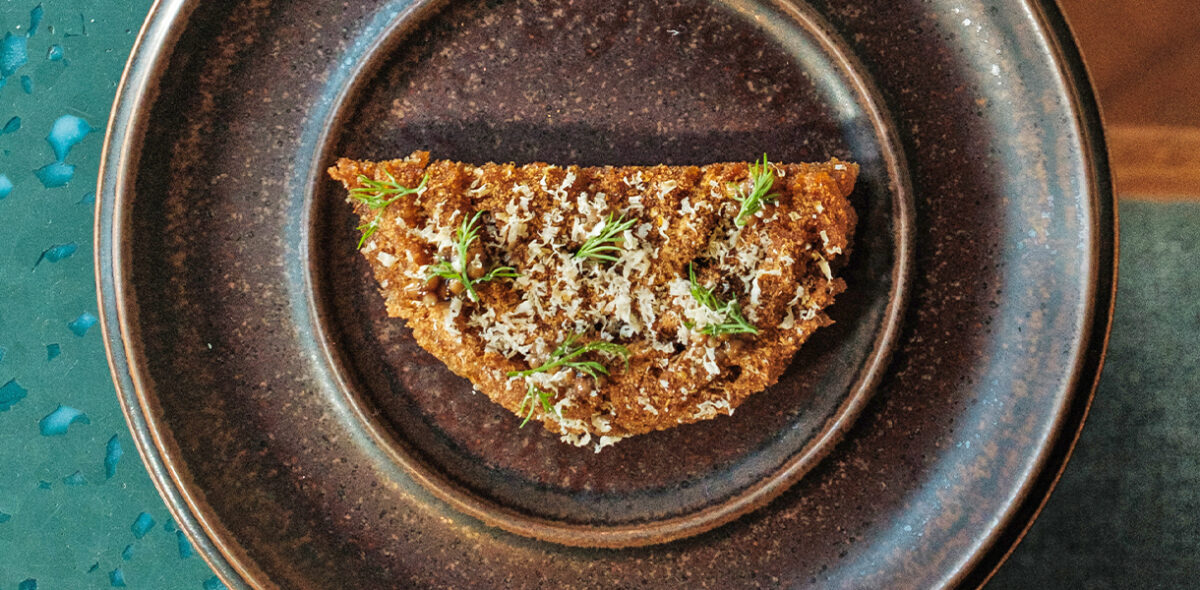
As my Uber winds uphill through the dark and narrow streets of Lisbon’s historic Alfama neighbourhood, I contemplate what my much-anticipated evening at SEM restaurant will bring. Condé Nast Traveller writes, ‘From the minute you sit down, you’ll be absolutely intrigued.’ And compelled, too, for in an age when global food waste is disappointingly ‘the norm’, and continues to contribute to climate, global-greenhouse-gas and biodiversity crises, the concept of a zero-waste restaurant is not only enthralling, but necessary. It’s a commitment to the environment, a promise of hope.
‘The way we eat determines how we use our world. There is no doubt about how harmful the food industry is and how much it contributes to the climate crisis,’ says SEM cofounder Lara Espírito Santo. ‘But food is essentially a creativity-based industry, and this fundamental difference allows it to be part of the solution as well.’ Santo, along with cofounder and chef George McLeod, hopes that the experience at SEM, which centres around a six-course tasting menu, will be a more than palatable education in a sustainable future for food. For both home cooks and restaurateurs alike, there are lessons to be learnt from SEM’s successes (which include Time Out’s Best New Restaurant Lisbon 2021 and Mesa Marcada’s Best New Restaurant Portugal 2021).


EMBRACING LIFE GETTING IN THE WAY
If it weren’t for the existence of a pet dog, one of Europe’s most culinary innovative restaurants would not exist. Before SEM was a conceptual kernel in the minds of its cofounders, there was Covid-19. Prior to the pandemic, the couple – she Brazilian, he a New Zealander – had met in London, where both went on to work at Silo, the city’s first zero-waste restaurant. The industry’s forced hiatus during Covid-19 saw Santo and McLeod out of work in a city that had largely come to a legislated standstill. Questioning what this meant for them, and whether they could survive months of lockdown in a basement apartment with limited natural light, the couple considered relocating to Brazil. But Choppe, their golden retriever, altered the narrative. Unable to fly their dog to Brazil in a manner that met their needs, the pair was left rethinking their plans. Santo’s father is Portuguese, which meant the couple could temporarily relocate to Lisbon, where a less restrictive lockdown would allow them to work. They made the move and together ran a beach bar for almost a year before deciding to make Lisbon their home and open their own zero-waste restaurant.

ESTABLISHING MEANINGFUL VALUES
With her background in sustainable development, and his experiences working in restaurants in New Zealand, Australia and England, Santo and McLeod quickly laid the foundations of SEM’s core values: supporting regenerative agriculture and fighting food waste. ‘Every ingredient that arrives at the restaurant is used in its entirety,’ explains Santo. ‘Peels, seeds, skins and bones are parts of a whole that carry nutrition, flavour and the potential to become something more.’ An initial indication of this is the unusually bound menu. ‘Lara’s father harvests wild asparagus for us,’ explains McLeod. ‘Their very long stems are only partly palatable. I dehydrate the remains to bind our menus.’ The menus link dishes to an ‘impact’ key, offering insights into how SEM’s values translate per course. Being micro-seasonal, dishes change regularly. It’s mid-summer the night I visit, and upcycled by-products, preserved micro-seasonals and heritage ingredients have pride of place on tonight’s menu, with some courses incorporating unexpected species or undervalued ingredients. ‘Using wild and invasive species is a pillar of our vision and further evidence of our perspective on food waste: waste is what exists in excess, whether due to imbalances in the food system or commercial devaluation,’ explains McLeod, referencing – in part – a fish course that replaces overfished saltwater species with the invasive freshwater zander (pike-perch). ‘Being zero waste is not only about what we throw away, but perhaps more about what we don’t use,’ he adds.


PARTNERING THOUGHTFULLY
In the four years since opening, SEM’s duo has cemented collaborative relationships with producers, winemakers and farmers who work with nature, not against it. ‘Their practices restore soil health and promote biodiversity in their ecosystems,’ says Santo. ‘What they produce dictates the restaurant’s menu, and the dishes adapt symbiotically to what happens in the fields.’ Animal proteins feature, but aren’t championed on SEM’s menus the way plants are. SEM makes heroes of fruit and vegetables. Foraged wild ingredients like nasturtiums, elderflower, eucalyptus leaves, sea figs and acorns are also given moments to shine.
Two wine pairings are offered, one featuring low-impact wines from estates with shared values, compelling stories or unusual methodologies. Knowledgeable sommelier Baptiste Guimiot explains the provenance of my wines, which include an aromatised wine-based drink that’s been through repeat fermentations (and has a nose similar to kombucha), and a flinty white from the islands of Faial and Pico in the Azores.


McLeod’s is a world where, rather than binned, sweet potato skins become miso broth, blackened citrus pith is upcycled for its flavour, and Worcestershire sauce is homemade from waste.
BEING CONSISTENT
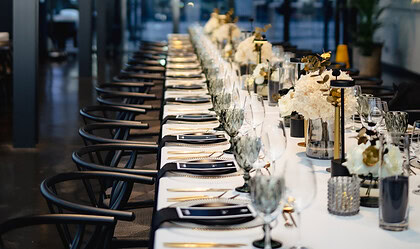
While SEM’s cuisine is particular, its interiors are unfussy, boasting a casualness reminiscent of neighbourhood locals. Prior to entering the culinary world, McLeod spent time in construction, and SEM’s appearance owes much to this. It was the chef who joined the interiors of two adjacent shopfronts, and carried out basic construction. While he considers the space a work in progress – ‘I’m building the airplane as it’s flying’ – much of what exists already harmonises with SEM’s values. Brazilian artist Miguel Saboya created the tables and bar, incorporating invasive acacia wood and recycled plastics in both, the latter surrounded by floors made from upcycled shoe soles. Low-hanging pendant lamps, crafted in papier-mâché by local artist Salvador Salazar, emit a glow that warms the space.


THROW NOTHING AWAY
Open shelves in both SEM’s kitchen and dining area include an assortment of cookbooks indicative of McLeod’s interest in Nordic, South American and other cuisines. But year on year, shelf space for these diminishes as glass jars and bottles filled with preserved and fermenting by-products take their space. A closer look reveals pickled garlic flowers, blueberry boshi, black-bean amino, umeboshi, garlic and pear shio koji, and buttermilk and treacle garums. This arsenal of flavours is indispensable to McLeod. ‘We are a kitchen that does not use high-end products like caviar, foie gras or tuna belly,’ he says. ‘Chefs, after all, are a creative group of people and, with the right mindset and skills, can transform simple ingredients into interesting and high-level foods.’ Ask him what happens at SEM to conventionally-discarded strawberry seeds, and he’ll answer that they’re the basis for a spicy pil-pil sauce.
His is a world where, rather than binned, sweet potato skins become miso broth, blackened citrus pith is upcycled for its flavour, and Worcestershire sauce is homemade from leftovers. ‘Being a zero-waste kitchen means that when creating new dishes and new menus, past, present and future must be considered,’ he adds. ‘Whether for the present moment or the future, we are always thinking.’