
NATURE’S TRIUMPH
In the pitch black of night, an unholy scream, a baboon’s bloodcurdling alarm call. Moments earlier, our tracker’s spotlight had briefly illuminated the source of distress: a leopard zipping through the bush, hot on the hooves of a bolting impala.
Following the baboon’s shriek, the bush was suddenly on high alert, the air alive with unsettled panic as dry leaves rustled, branches snapped, more baboons cried out, and the sudden life-and-death chase causing a furious energy to rip through the darkness.
Earlier in the day we’d spent hours watching a pride of lions at their most domestic: play-fighting, wrestling, rolling and yawning, indulging in games of chase and pouncing on one another’s tails, sharing moments of affection and revelling in the idleness for which sated lions are known.


We were in the most faraway and active part of Lower Zambezi National Park, a world barely touched by time: fish eagles soaring on thermals, marabou storks perching in treetops, hundreds of tiny quelea birds dancing and swirling and tumbling through the sky in a glorious murmuration. Then there’s the almost existential heat, the bright, intense sunlight, and that intoxicating feeling of liberation that comes from being as far from anything familiar as it’s possible to be.
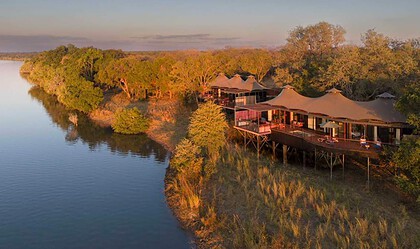
This sense of remoteness and freedom is part of the USP at Anabezi, a lodge built entirely off the ground in part of the park defined by its abundance of winter thorn or ana trees (Faidherbia albida, aka apple-ring acacia) that reach 30m in height and produce pods that elephants love to eat. The other thing elephants do around here is stand on their hind legs like show ponies in order to reach for the tastiest branches of the juciest trees.
Even without leaving the lodge, activity was constant. ‘We have resident leopards that hang out at the camp,’ I was told one night while being escorted to my tent. ‘Sometimes they kill impala between the rooms. Then they pull them under the tents or into the shadows between the bushes.’
This was after dinner was interrupted first by a pride of lions loping across the floodplain in front of the lodge, and then later by a leopard unsuccessfully hunting impala in the darkness.
If Lower Zambezi feels untouched, it’s thanks to geography. It might be a mere 40 minutes from Lusaka in a four-seater Cessna, but the park feels somehow sequestered from the reach of civilisation. There’s a range of mountains forming an escarpment along the northern flank; the other geographic boundary is the Zambezi River. Across the water is Zimbabwe’s Mana Pools National Park, a place well known for its wild dog population that was featured in the BBC’s Dynasties series.
On the Zambian side, a genuine sense of wildness has been preserved: there’s no inkling of large-scale tourism, and no easy roads in.


The low-altitude flight in, though, is absolutely dreamy. First there’s the broccoli-like vegetation, then the mountains, and then an overhead view of the Zambezi River where it’s possible to make out crocodiles and hippos, spot elephants trumpeting and flapping their ears on the islands, and the heart-stopping wild emptiness of the park itself, where small planes touch down on the hardscrabble compressed sand of rustic runways.
Linked by raised boardwalks, Anabezi’s 12 voluptuous tented suites open onto wide decks hovering above the floodplain, each with a plunge pool and a view directly towards the river, near enough to hear the stereophonic honks of hippos and see elephants padding through the water between Zimbabwe and Zambia.
Anabezi, now owned by the Dulini safari group, is open from April to November, with prime season kicking off in July, when the long grass and dense vegetation recedes, making game viewing easier.
WILDEST PARADISE
From Livingstone, the 90-minute flight in a twin-prop six-seater provides a surreal sense of physical and temporal displacement as you wing north over a rugged landscape with few signs of human habitation. Described by some as Zambia’s Serengeti, the Busanga Plains in northernmost Kafue National Park is an unsullied, bountiful wetland of palm groves, papyrus reed beds and lagoons covered by lilies.

The rarity of the pristine wilderness is heightened by the fact that it’s only accessible from June to October. In summer, rains inundate the land and render the black cotton soil a nightmare for vehicles; the only half-decent way to get around is by mokoro, following hippo-carved channels.
Such a prolonged wet season explains why Shumba, one of two Wilderness lodges here, is entirely raised on stilts, its six tented suites and public areas linked via wooden boardwalks.
Once the water recedes, Shumba begins to look as though it’s floating upon a sea of yellow gossamer. From just about every vantage point – your bed, the pool, the bar, the lounges and even the bathroom – you enjoy exhilarating views across expansive golden grasslands that emerge like shimmering carpets interspersed with wooded islands of sausage trees, palms and pioneering fig trees.
As you drive into Busanga’s vastness, veteran guides, like Shumba’s head ranger, Isaac Kalio, will tell you about the physiognomic nuances distinguishing puku from lechwe, just two of the 21 varieties of antelope found in Kafue, and as common in Busanga as impala are in Kruger.
The array of ungulates explains why the region’s so popular with predators: leopard and cheetah occur in tantalising numbers, while lions are so profuse that Busanga became the main location for National Geographic’s documentary Swamp Lions, which spawned an entire mythology around Kafue’s famous ‘black-maned’ males with their distinctive coiffure.


You’ll see lions everywhere: on the hunt, lolling in the shade of trees with their bellies distended from feeding, and regularly leaping over water channels, the cubs daintily trying to figure out how to jump over the skinniest puddles to avoid getting their paws wet.
In the aftermath of a lion kill, you might come across a makeshift boneyard where dozens of blood-spattered vultures will be squabbling over bits of carcass, ripping apart guts and sinew with their fierce beaks, behaving like unruly guests at a medieval banquet.
There’ll be countless more indelible scenes: hippos bulging out of the lagoons in muddy piles, a leopard slinking across open grassland, huge lechwe herds dispersing en masse, leaping through the wetlands like African reindeer.
At times, though, you will catch yourself simply staring into the irresistible emptiness, taking stock of a landscape so vast and pure it’s like a visual meditation, a direct link with something raw and primordial and timeless. In those moments, you will know the meaning of true wilderness.
RIVERSIDE BENEDICTION
Languid, dreamy, ideally accompanied by a cooler box full of bubbly, a sunset cruise on the Zambezi River is about as lazy and laid-back as life can get.

There’s an instant easing of the soul as the slow-drift of scenery lulls and hypnotises you, its spell enhanced by those startling Zambezi staples: hippos eyeing you with suspicion, crocs playing at being logs, the occasional elephant drinking at the water’s edge. Plus zippy bee-eaters and thermal-soaring fish eagles, flightless African finfoots and skimmers harvesting insects from the water’s surface as the sun dissolves into the horizon.
Safely on a boat, it’s easy to forget just how wild and ferocious the Zambezi can be and the trouble you can get yourself into. Until you see a canoeist paddling like mad to ‘outrun’ a hippo in a mood. Or you pause to wonder what happens if a boat engine cuts out. There are plenty of tales of people going over the edge at the Falls, hippos capsizing tiny vessels, people at the river’s edge taken by crocodiles.
And yet, Mukwa River Lodge is an outpost of nourishing calm 20km upstream from the thundering smoke, where the river is mirror-still, its placid surface calmly reflecting back an upside-down interpretation of the shaggy treeline along the Zimbabwean bank of the river. And rather than the roar of the Falls, it’s the gentle sing-song of birds, now and then a duck splashing down, occasionally a bellyflopping hippo.
Mukwa, which sits on the river’s edge, with suites facing the water and the entire boutique-scale resort-style lodge designed around riverine channels and wild gardens, is abundantly green and rolling in shade. You are on the mainland yet feel like you’re on an island, the lodge tumbling down to the jetty, with decks on the river, wooden boardwalks winding between the buildings and pathways leading to a handful of huge rooms that provide an immediate connection with the vastness of this natural sanctuary. It’s all done in such a way that it ultimately doesn’t matter if you are inside or out.


The suites, either river-facing or looking on to the island waterways, are richly designed, filled with every convenience (plus outdoor showers and splash pools and places to soak up the sun), hippo grunts and chattering birdlife a bonus.
There’s a special feeling you get waking up this close to the Zambezi. It has an energy, a mood, and is a soothing balm. I felt it at 5am as birdsong and frog croaks filled the dawn, and as I listened to hippos splashing about somewhere in front of my room. I felt right in the middle of it, steeped in the wildness of Africa.
Mukwa is as far from cookie cutter as you could hope to get, every need and potential desire catered for (including probably the best spa treatments in the country). Still, while the bar is industriously stocked and every meal a triumph, lolling by the river and indulging isn’t all there is to do. You’re encouraged to set forth and explore, to get a glimpse, too, of real Livingstone, which is about 20 minutes down the road. A tour of the local market is a real slice of everyday, non-touristy life, where you can buy flamboyantly patterned chitenge cloth and pick up peanut butter crushed while you wait.
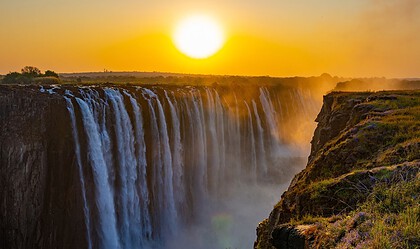
And don’t neglect Victoria Falls. That sound, that thunder, the awe and wonder. The damp air. The startling intensity of the rainbows, the sparkle of sunlight off the glistening rocks, the ozone smell in the air, the vibrant green of the spray forest. The drenching you get that makes you want to dance and sing, to spread your arms out wide and let the force of it take you.
The Falls are a kind of full-body blessing, a message from a higher power. It’s that aliveness, an energy and vitality that accumulates over thousands of kilometres as the Zambezi snakes through the varied landscapes of Africa and arrives at this one geographic point to drench and thrill a bunch of mesmerised humans, most of whom have travelled from the ends of the earth to experience an unforgettable watery benediction.

by Keith Bain